Reviewed · PRAGUE TOURS
Prague: House at the Golden Ring Entry Ticket
The House at the Golden Ring turns Prague’s past into something you can look at from several angles: a model of the medieval city, original objects from daily life, and a nine-metre animation that fills a wall with Prague under Rudolf II. It’s a useful change of pace from churches and palaces, because here you can see how the city was put together and how people lived in it.
I like the way the exhibitions pair models and multimedia with archaeological finds, rather than relying only on written panels. I also like the low $8 price, which includes three exhibitions and leaves room in your day for other sights.
One thing to consider: the displays are best suited to someone with at least some interest in history. Exhibition dialogue is in English, and there is no French-language version noted, so the experience may be less rewarding if you prefer another language.
Key points to know before you go
- Charles IV’s Prague: Models show the city’s medieval development, including Charles Square and important religious and state buildings.
- A nine-metre city scene: The Rudolf II-era animation, called the New Sadeler Prospect, depicts Prague as a city full of people and daily activity.
- Three exhibitions in one ticket: Admission includes The Medieval Town, the Multimedia View of Prague During the Rule of Rudolf II, and From Prehistory to the Tailcoat.
- A mix of old and new: Archaeological finds and original objects sit alongside digital displays, video mapping, and virtual presentations.
- Plan 1.5 to 2 hours: That gives you time to see the exhibitions without rushing, though your pace and interest will shape the visit.
- Good value for a short museum visit: At $8 per person, it is an inexpensive way to add context to Prague’s historic buildings.
Start with Prague as a model
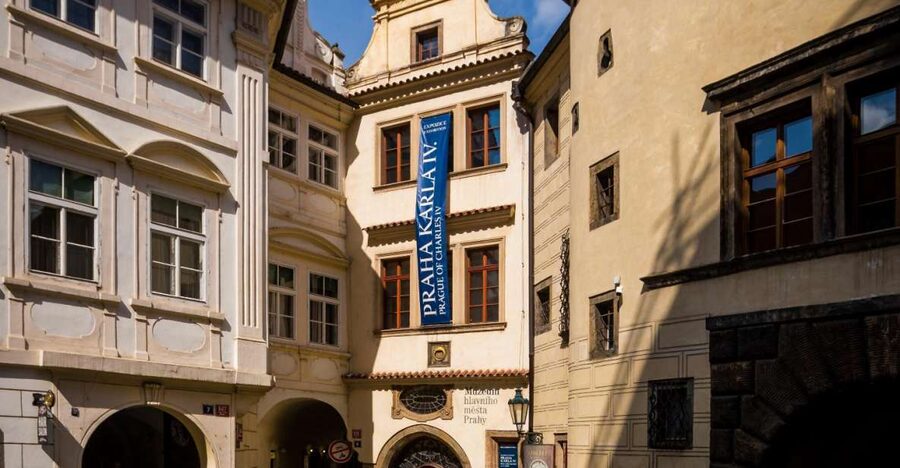
The House at the Golden Ring is a museum visit built around the city itself. Rather than beginning with one famous ruler or a single landmark, the exhibitions show how Prague changed under Charles IV and other members of the House of Luxembourg. The models help you picture the city as an urban whole, with new buildings and housing spreading through its built-up area.
That overview matters when you’ve spent time walking Prague’s streets. A church, square, or bridge can feel like a separate attraction when you see it on its own. Here, models and visual displays help place those structures within a growing city, giving you a clearer sense of how one building related to another.
The experience does not require you to arrive with a detailed knowledge of Czech history. The presentations use visual material to make urban change easier to follow, though the subject rewards visitors who like connecting dates, rulers, and buildings. If you mainly want a quick, hands-on activity with little historical context, some sections may feel slow.
A handful more Prague tours worth a look
- Prague: 50-Minute Sightseeing Evening Cruise
★ 4.2 · 33,780 reviews - Prague: Medieval Dinner with Unlimited Drinks
★ 4.4 · 19,847 reviews - Prague: Skip-the-line Castle Ticket and Optional AudioGuide
★ 4.3 · 11,121 reviews
See Charles IV’s city take shape
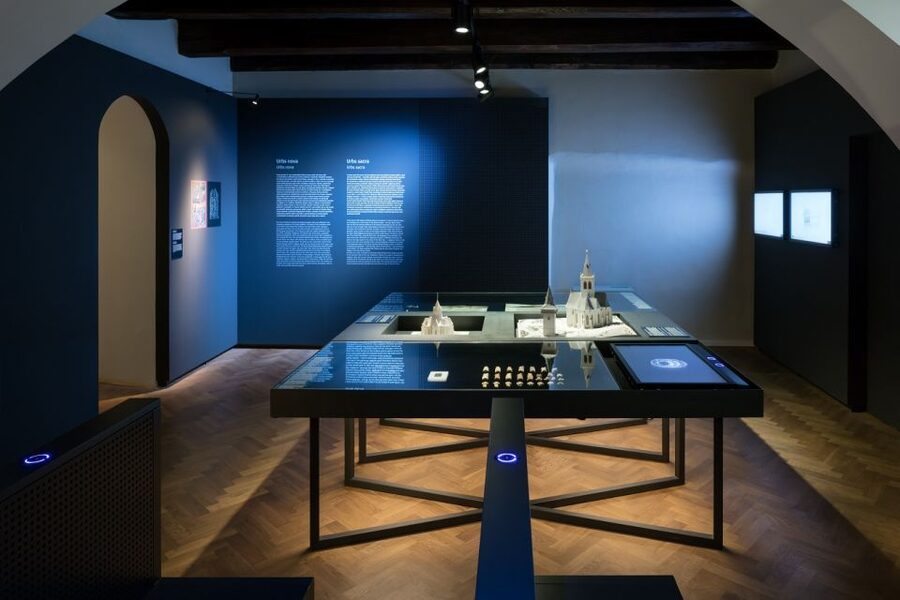
The Medieval Town exhibition is the natural place to focus if you’re curious about Prague in the 14th century. It brings together virtual and tangible models of buildings founded by Charles IV, showing how the metropolis developed during his rule and under the Luxembourg dynasty.
Look for the models of Vyšehrad, Prague Castle, and St Vitus Cathedral. In Charles IV’s time, these places served religious and state purposes, so they help explain how power and faith were expressed in the city’s buildings. The displays also include the stone bridge and other landmarks associated with Prague’s changing appearance.
A model of Charles Square and its surroundings is especially useful for understanding the city’s growth. Video mapping presents building and urban development in the area during the 14th century. You can take in a broader view than you get while standing on a street corner, where later construction and modern city life compete for your attention.
The models are a strength, but your enjoyment will depend partly on how much you like looking closely. They reward a slow circuit and a bit of curiosity. If you move quickly from one display to the next, you may miss how the parts fit together.
Watch the medieval city at work
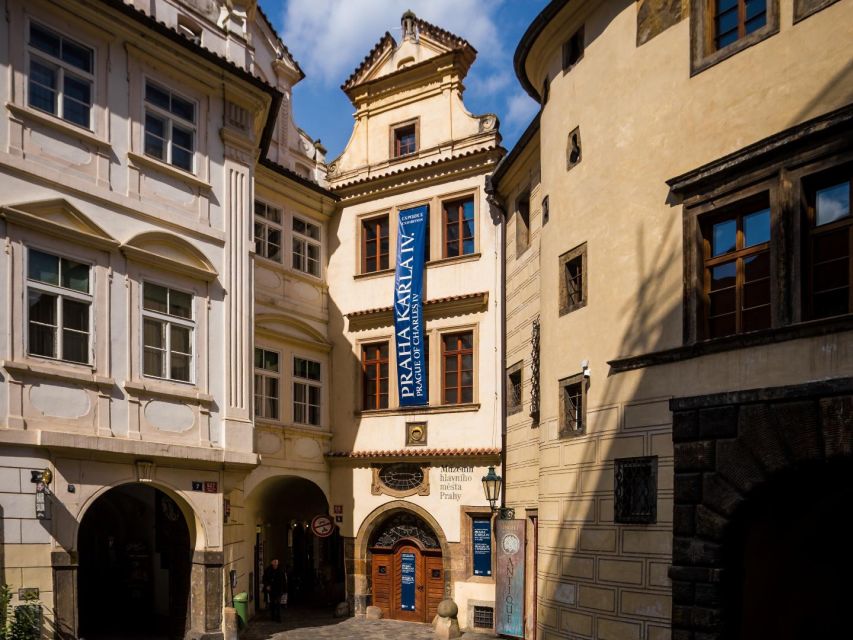
The exhibition does more than show where buildings stood. Virtual presentations explain town administration and medieval bridge construction, giving practical context to the city’s growth. Those subjects might sound technical, but they help answer the questions that a row of impressive façades can leave hanging: how was a town managed, and how did people build the links that connected it?
Dramatic scenes evoke moments in Charles IV’s life, including his birth, his arrival in Prague in 1333, his coronation, and his burial. These stops provide a human thread through the architectural material. Instead of treating the city as a collection of stone monuments, they connect its changing shape with the events of a ruler’s life.
The presentations are one reason this museum can work for different ages. There are more visual ways to take in the subject than reading long blocks of text alone. Still, it remains a history museum, not a performance or a purely interactive attraction. Go expecting a mix of displays and historical interpretation, not nonstop action.
Find the people behind the city
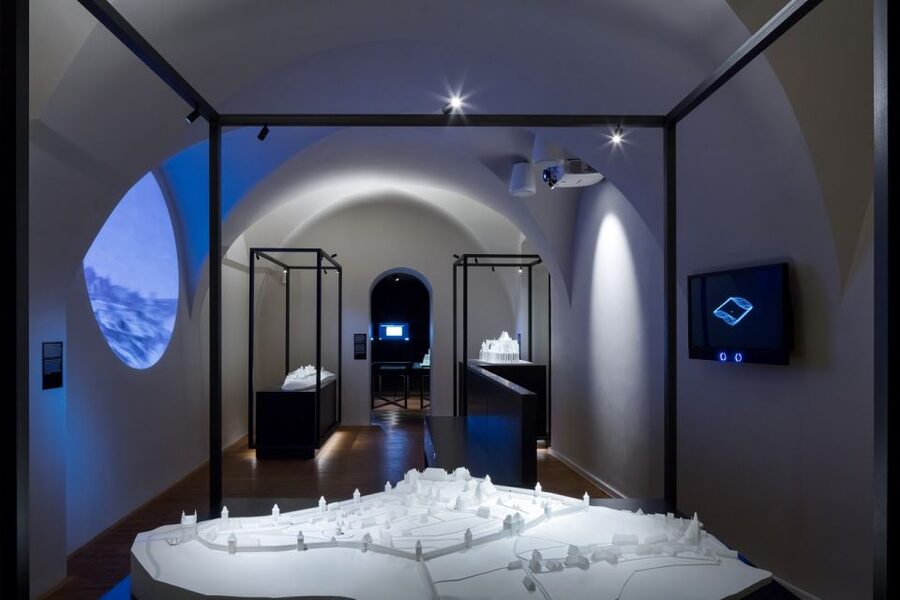
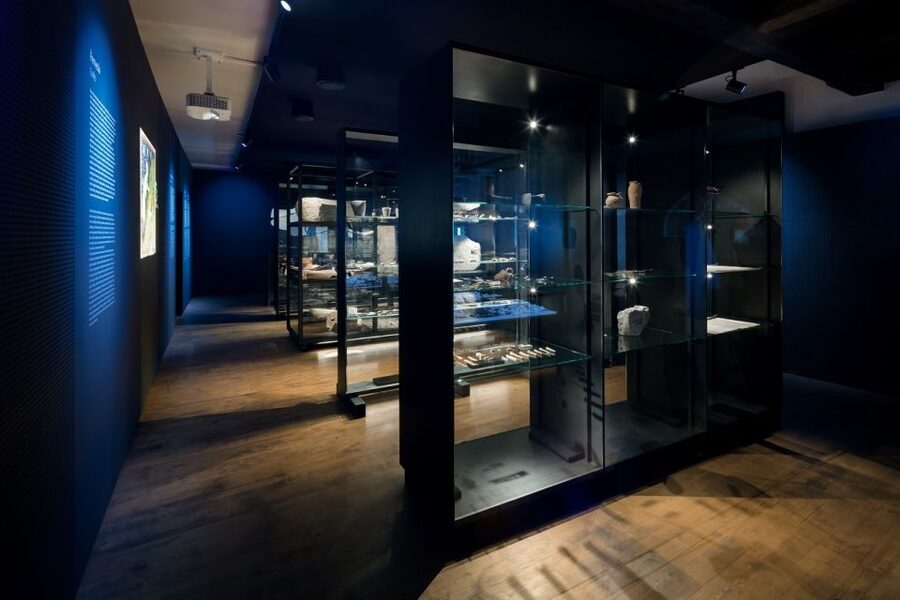
Archaeological finds and original objects add scale to the story. The collections draw on objects from the Prague City Museum, the National Heritage Institute’s regional office in Prague, and other institutions. They illustrate everyday life in the city during the rule of the Luxembourgs.
This material gives you a useful counterweight to the grand views of castles, cathedrals, and squares. A city is not only its rulers and public buildings; it is also the things people used and the routines they followed. The objects help make that point without requiring you to imagine medieval life from architecture alone.
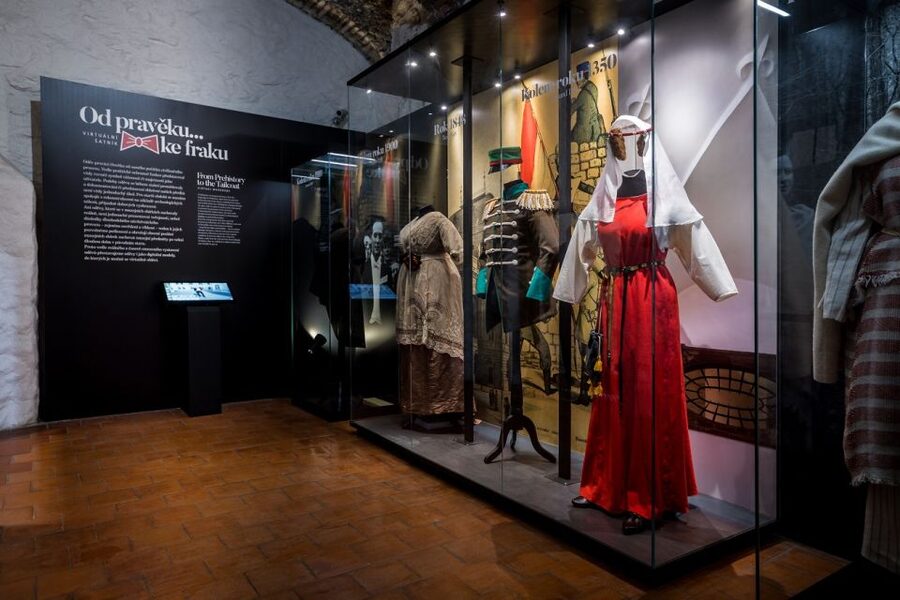
The displays include an interactive digital costume exhibition, another way to approach daily life through what people wore. If you enjoy seeing historical subjects presented through objects and visual media, this adds variety to the visit. If you prefer a traditional museum layout with a clear sequence of artefacts and detailed text, the changing formats may feel less focused.
Or see the city from another angle:
- Prague: Castle Tour with Local Guide and Entry Ticket
★ 4.6 · 10,422 reviews - Prague Castle 2.5-Hour Tour Including Admission Ticket
★ 4.7 · 8,927 reviews - Prague: Oldtown, Medieval Underground & Dungeon History Tour
★ 4.2 · 8,244 reviews - Prague: Vltava River Night Cruise with Buffet
★ 4.3 · 7,338 reviews
Look for the nine-metre Rudolf II animation
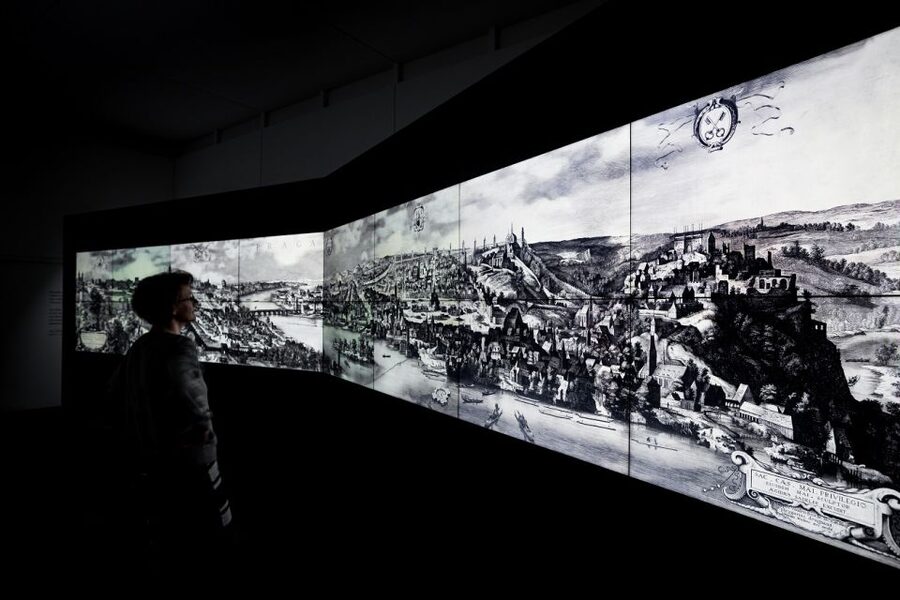
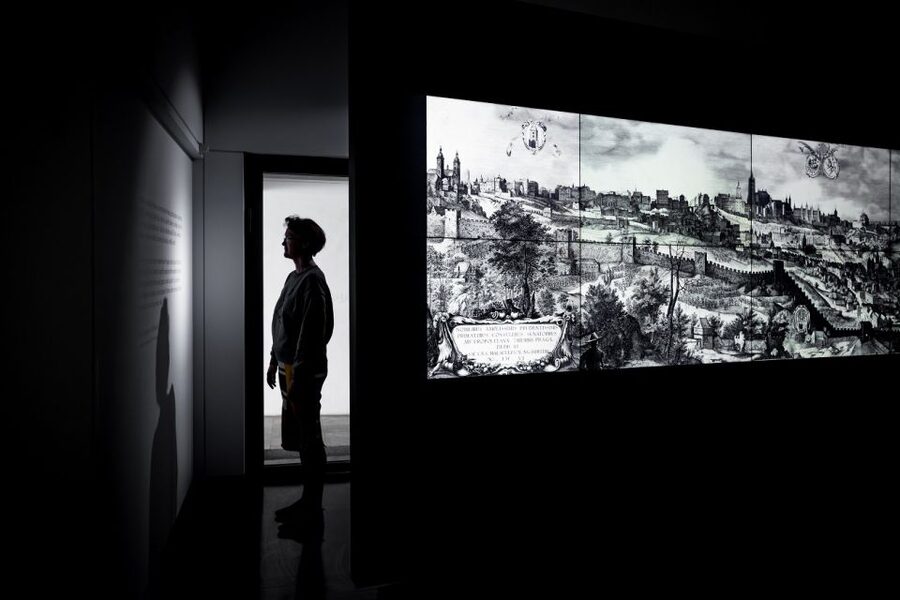
The Multimedia View of Prague During the Rule of Rudolf II offers a different kind of city portrait. Its nine-metre animation shows Prague in the Rudolfine era as a place full of people, with ordinary joys and worries alongside the larger history of the city.
The image is called the New Sadeler Prospect. It was created through joint work by historians and specialists in modern technology, combining research with a broad, animated view. Rather than presenting Prague as a frozen skyline, it depicts a city in motion and gives you a sense of daily activity.
Video mapping also presents the Prague conurbation model and the area around Charles Square. That contrast between a moving, expansive image and physical models makes the exhibition worth taking at a measured pace. Pause long enough to pick out details, rather than treating the animation as a backdrop on the way to the next room.
This is likely to be one of the most memorable parts for someone who learns best through images. It may be less satisfying if you want a guided explanation at every stop. The activity is listed with English as its language, and exhibition dialogue is in English; no French version is noted.
Use the third exhibition as an extra
Your ticket also includes From Prehistory to the Tailcoat. The supplied details do not describe its individual displays, so it’s best to think of it as an additional exhibition rather than the main reason to book. Its inclusion broadens the ticket beyond the medieval and Rudolf II sections, but the central focus of the experience is Prague’s urban history.
That third exhibition can be a welcome extra if you have time and want a fuller museum visit. If your schedule is tight, prioritize the medieval models and the Rudolf II animation first, then decide how long to spend on the remaining material.
Allow time, but keep your expectations grounded
A practical visit takes about 1.5 to 2 hours. That estimate gives you time to see the models, watch the presentations, and look at the archaeological objects without turning the visit into an all-day commitment. You could spend longer if you like reading and comparing details, while a quicker visit may suit you if you mainly want the main visual displays.
The ticket is valid for one day and costs $8 per person. That is good value if you make time for more than one exhibition: you get the medieval town, the Rudolf II presentation, and the prehistory-to-tailcoat exhibition for a modest entry price. It is also easy to fit into a sightseeing day because the visit is shorter than a large museum outing.
There is free cancellation up to 24 hours in advance for a full refund, and you can reserve now and pay later. Starting times depend on availability, so check the options when booking. The activity language is English. No group size or named guide is specified, so plan on a museum visit with exhibitions rather than a personally guided tour.
Who will enjoy the House at the Golden Ring?
I’d recommend this for you if you want more than a postcard view of Prague and enjoy understanding how a city grew. It’s especially useful after you’ve seen some of the city’s historic buildings, because the models give you a fresh way to connect landmarks and urban development.
Families may appreciate the mix of models, video, and visual displays, which offers more variety than a museum made up only of written panels. The visit can also suit a short break in a day of sightseeing, thanks to its modest price and manageable duration.
On the other hand, if history is not your thing, the displays may feel dry despite the multimedia elements. And if you need French-language dialogue, this is not the right choice based on the language information available. The museum’s appeal rests on the subject and the visual presentation, not on a live guide or entertainment designed to keep you moving.
Should you book it?
Book the House at the Golden Ring if you want an affordable, focused look at how Prague developed, especially in the time of Charles IV and Rudolf II. The strongest reasons to go are the city models, the everyday objects, and the nine-metre animated view. At $8, with three exhibitions included, it offers a lot for a short museum stop.
Skip it if you have little interest in history or expect a guided, highly interactive activity from start to finish. For the right visitor, though, it adds valuable context to Prague’s grand architecture and makes a sensible, low-cost addition to a day in the city.
FAQ
How much does admission cost?
Admission is $8 per person.
How long should I allow for the visit?
Plan about 1.5 to 2 hours to see the exhibitions at a comfortable pace.
How long is the ticket valid?
The ticket is valid for one day.
Which exhibitions are included?
Admission includes The Medieval Town, Multimedia View of Prague During the Rule of Rudolf II, and From Prehistory to the Tailcoat.
What language is the activity in?
The activity language is English. Exhibition dialogue is in English, and no French version is noted.
What can I see in the Medieval Town exhibition?
You can see models of buildings founded by Charles IV, including Vyšehrad, Prague Castle, and St Vitus Cathedral, along with displays on the city’s development and medieval bridge construction.
What is the New Sadeler Prospect?
It is a nine-metre animation showing life in Prague during the rule of Rudolf II.
Can I cancel for a refund?
Yes. You can cancel up to 24 hours in advance for a full refund.
Can I reserve without paying right away?
Yes. The reserve-now, pay-later option lets you book without paying at the time of reservation.
Newly listed in Prague
- The only full Anthropoid tour with a visit to curve and Lidice, by private car★ 5.0 · 30 reviews
- Prague E-Bike City Sightseeing Tour★ 5.0 · 3 reviews
- Private UNESCO Český Krumlov Trip from Prague with Local Guide★ 5.0 · 32 reviews
- Stand-Up Paddleboarding on the Vltava River in Prague★ 5.0 · 63 reviews
- One Prague Tour: Old Town Road with local Food & Beer ️★ 5.0 · 137 reviews
- Full-Day Countryside E-Bike Tour to Karlstejn Castle (small group★ 5.0 · 40 reviews
- Historical Prague – Walking Tour with pick up★ 4.5 · 5 reviews
- One Hour Boat Tour on Vltava River★ 3.0 · 20 reviews
Prague Tours, compared.

Skip-the-line Castle Ticket and Optional AudioGuide
Read our review →
Castle Tour with Local Guide and Entry Ticket
Read our review →
Prague Castle 2.5-Hour Tour Including Admission Ticket
Read our review →
Oldtown, Medieval Underground & Dungeon History Tour
Read our review →