
Reviewed · PRAGUE ART TOURS
Prague: Private Prague Art Nouveau and Cubism Tour
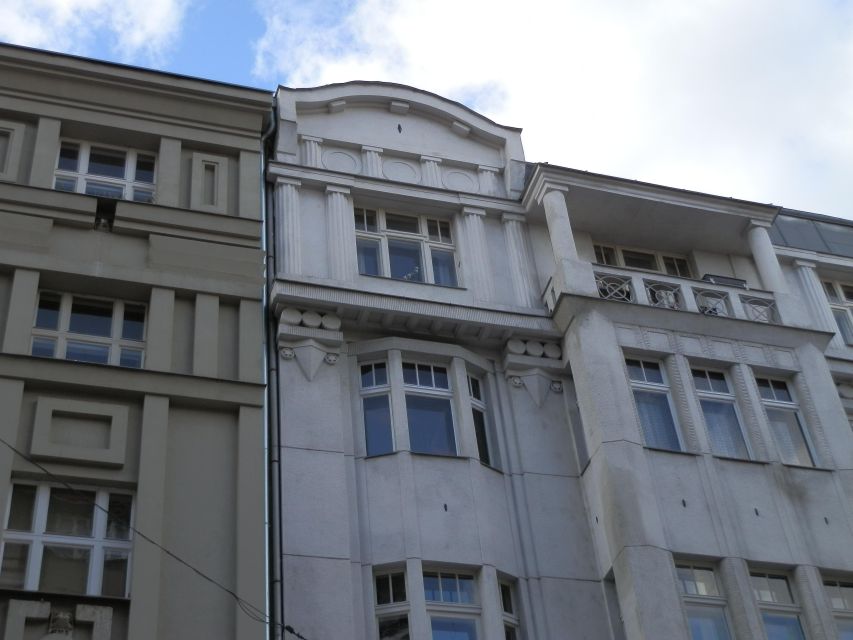
Prague’s early 20th-century buildings tell a story you can easily miss while hurrying between the castle and the Old Town. This private tour follows Art Nouveau from the Central Station into the New Town, then tracks Cubism to a group of striking houses below Vyšehrad.
I like two things in particular: the guide explains how these styles grew from, and reacted against, earlier architecture, and the route takes you beyond the usual central sights to see Cubist buildings in a quieter part of the city. Guides Max and Eva have led the tour in English and German, with guests praising their clear explanations and willingness to answer questions.
The main consideration is the length. The route covers a lot of ground, and one account describes a tour of about three and a half hours, with the final section feeling longer than necessary. Wear comfortable shoes and be ready for several short walks, plus tram rides.
At a glance
- Start at Prague’s 1909 Central Station: The tour opens with a look at a major Art Nouveau-era building, setting up the story of modern Prague.
- Compare Art Nouveau with Cubism: Your guide explains how one style developed from 19th-century influences and how the other pushed back against it.
- See buildings beyond the main tourist circuit: The route includes central sights, then heads to Cubist architecture near Vyšehrad.
- Walk, then ride the tram: Public transport tickets for the rides are included, and the tour ends near a tram stop.
- Book a private guide: Tours are offered in English and German, and the group is private.
- Plan for several hours on foot: The route links many short stops, so comfortable shoes matter.
Begin with Art Nouveau at Central Station
Meet your guide in the middle of Platform 1 at Prague’s Central Station. Look for a red folder. The station was built in 1909 and has recently been reconstructed, making it a fitting place to start a tour about the architectural changes that reshaped the city around the turn of the 20th century.
Rather than treating the station as a quick meeting point, the guide uses it to introduce Art Nouveau and its place in Prague’s story. You’ll hear how the style grew out of 19th-century architecture, what made it feel new, and why its forms helped point toward modern design. The value here is the explanation: once you know what to look for, details on later buildings become easier to read.
From the station, the route heads into the New Town on foot. The first walking links are short, but this is still a city walk with multiple stops. You’re not simply being driven from one landmark to another, so comfortable shoes are a sensible bit of preparation.
The tour is designed to connect architectural styles with the changes of the 20th century. Art Nouveau and Cubism were not just different ways to decorate a facade. They reflected competing ideas about what modern architecture should look like, and the guide places those arguments in the context of the era.
More art tours in Prague:
- IAM Illusion Art Museum Entry Ticket
★ 4.2 · 1,664 reviews - IAM Illusion Art Museum Prague Fast Pass Ticket
★ 5.0 · 957 reviews - Prague: Ticket to Audiovisual Light Art at Lumia Gallery
★ 4.4 · 607 reviews
A synagogue, civic buildings, and changing styles
The Jubilee Synagogue is an early stop, followed by several brief visits to buildings described as lesser-known architectural highlights. The stops are short, generally around five minutes, so expect a series of focused looks rather than long visits indoors. The appeal is in comparing forms and details as you move through the streets.
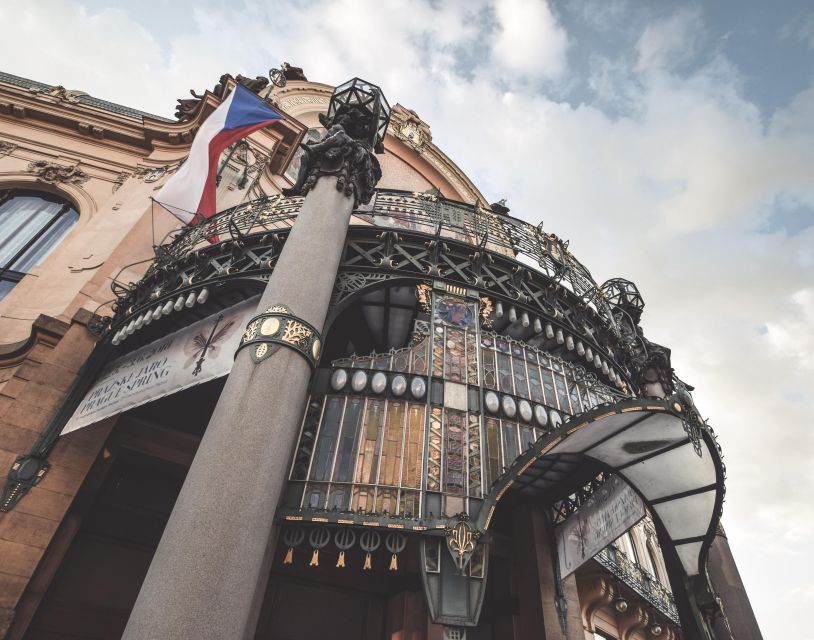
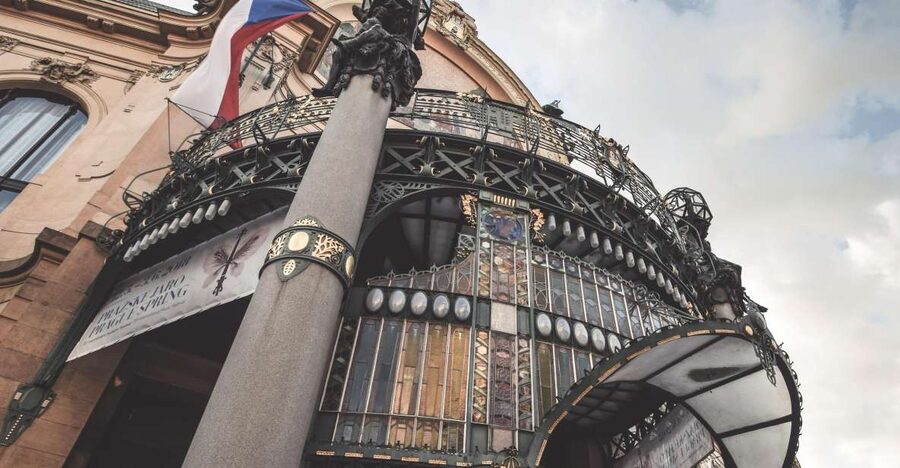
The route continues to Municipal House, one of the major Art Nouveau stops. Here, the style’s decorative character becomes easier to appreciate in a civic setting. Your guide can help connect what you see to the tour’s central question: how did a style that broke from older conventions shape the look of a modern city?
Next comes the House of the Black Madonna, a key Cubist stop. The contrast with Art Nouveau gives the tour its narrative shape. Cubism began as a revolt against the popular style, and the guide explains how its architectural experiments offered a different answer to the question of what modern buildings could be.
The itinerary also includes more short stops between the major named buildings. Their exact names aren’t specified in advance, so you’ll want to think of the route as a guided selection rather than a fixed checklist of famous interiors. That can suit you well if you enjoy looking closely at the street itself and hearing why an otherwise ordinary walk might contain a building worth pausing for.
Wenceslas Square is another substantial stop, with about 20 minutes set aside. It gives the guide room to discuss the city’s architecture in a broader urban setting, rather than focusing only on individual facades. You’ll also see how the modern buildings of Prague helped preserve the city’s older architectural character, a central idea of the tour.
Follow Cubism toward Vyšehrad
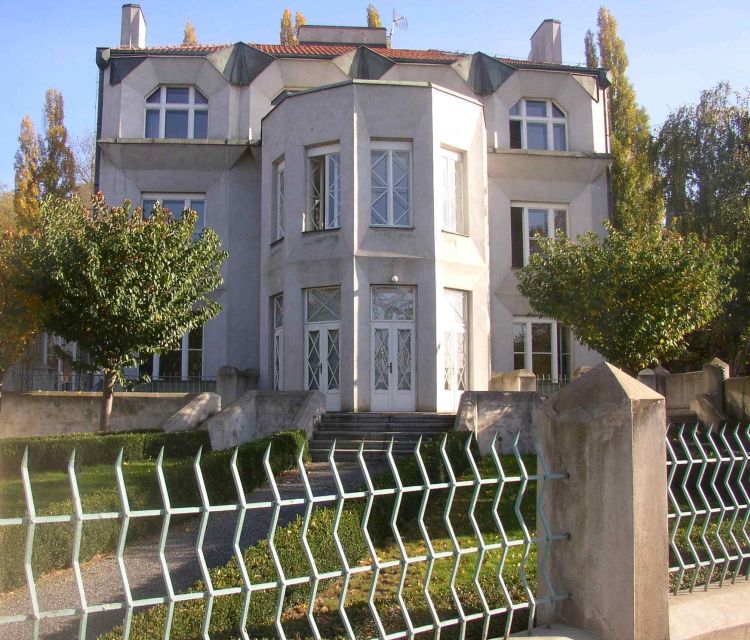
After spending substantial time around downtown, you’ll take a short tram ride toward a more remote area below Vyšehrad fortress. This shift is a practical and welcome change of pace: the tour moves away from the central streets and into a district where some of Prague’s most daring Cubist architecture is found.
The tram rides are short, around five minutes each, and public transportation tickets are included. The route lists two tram legs, with walking between stops. This is not a day spent entirely on foot, but it is still an active outing, with several transitions between buildings and transport.
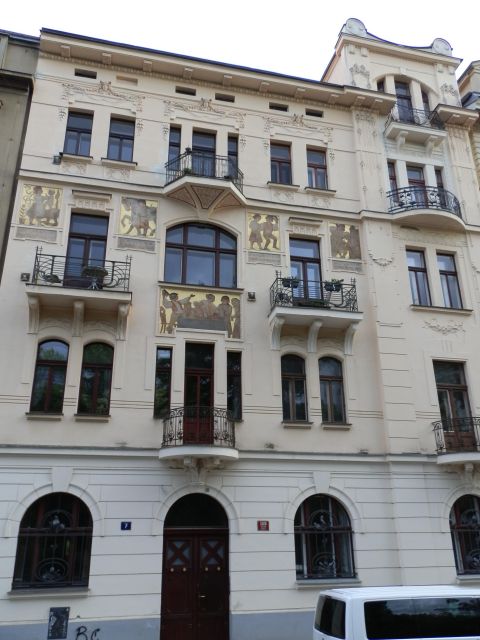
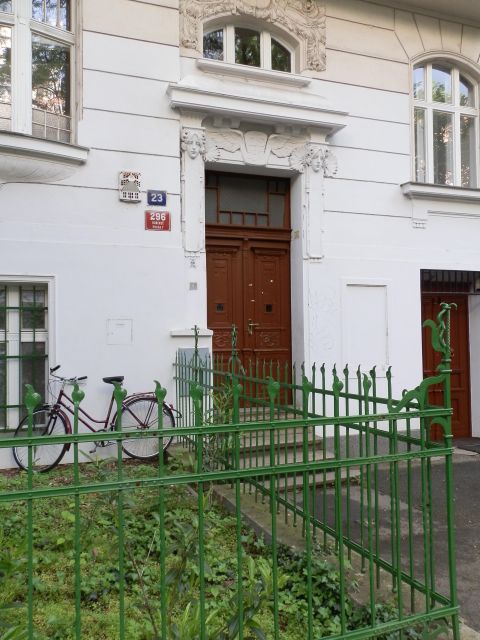
The later stops include Three Cubist Houses, Kovařovicova vila, and Cubist house Vyšehrad č. p. 98. Each is a brief viewing stop. Together, they help make the case that Cubism in Prague was more than an abstract idea discussed in a museum: it became part of the city’s built environment.
This area is a particular reason to choose the tour if you’ve already seen Prague’s best-known sights. The guide takes you beyond the central tourist zone and gives context to architecture you might not otherwise seek out. The trade-off is that this final stretch adds time and travel. One participant felt the tour could have ended earlier, so if you prefer compact sightseeing, ask yourself whether the full route sounds rewarding enough to justify the extra section.
The tour finishes near a tram stop, which makes it straightforward to head back downtown. The return public transport ticket is included, so you don’t need to arrange a separate ride back as part of the tour.
The guide makes the buildings legible
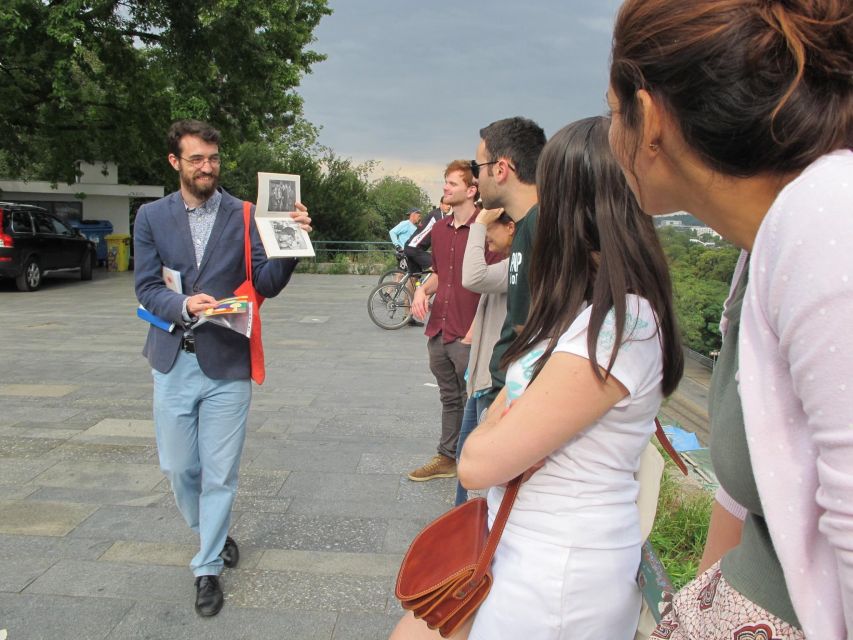
A strong guide matters especially on an architecture walk. The buildings are visible to anyone passing by; the point is learning what their styles mean and how they fit together. Max has led the tour in both English and German, while Eva has also guided in English. Both have been praised for clear explanations, strong command of the subject, and a friendly approach to questions.
That ability to answer questions can make a private tour more useful than a group walk with a fixed script. You can pause on a detail that catches your eye or ask for a clearer distinction between Art Nouveau and Cubism. The small group format also gives you more room to follow the story at your own pace, though the tour still has a planned route and a fair amount of ground to cover.
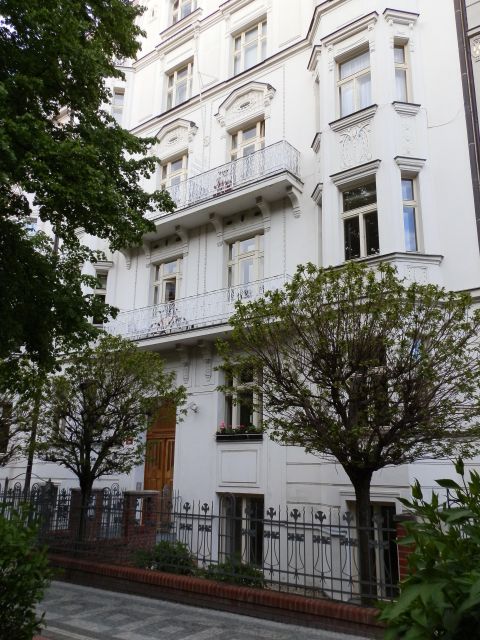
The historical frame is one of the tour’s strengths. Art Nouveau flourished before World War I, while Cubism emerged in opposition to its popularity. Both styles were then affected by the upheavals that followed the war. That arc gives the buildings a clear place in time: you’re not only looking at attractive designs, but tracing a brief period when architects were testing new ideas.
The route’s emphasis on the recent past also makes the subject approachable. These buildings belong to an era far enough removed to feel distinctive, but close enough that the social and cultural changes behind them can still make sense. For anyone who has wondered how Prague became a city of so many different architectural voices, this is a useful way to connect the pieces.
More private tours in Prague:
- Prague Old Town: Private Tour
★ 5.0 · 1,223 reviews - Prague Airport Private Arrival Transfer
★ 4.5 · 991 reviews - Prague Airport Private Departure Transfer
★ 4.5 · 780 reviews - Discover Prague Private Tour – 3 hours
★ 5.0 · 705 reviews
Is $84 a fair price for a private walk?
At $84 per person, this costs more than joining a standard group walk. The difference is the private format and the focused subject. You’re paying for a guide who can explain a specific architectural period, answer your questions, and take you from central buildings to Cubist examples near Vyšehrad. The tram tickets are included, which removes one small extra expense.
Value depends on your interests. If you’re new to Prague and have limited time, a general city tour may cover more of the classic sights. If you’ve already visited the main landmarks, or you’re spending a week in the city and want a more specialized outing, this route offers a different perspective and goes beyond the usual central circuit.
It is also worth weighing the time commitment. The booking details describe the activity as lasting one day, while the walking account puts it at around three and a half hours. Treat it as a substantial half-day activity rather than a quick stroll. If you’re concerned about the length, ask about the pace and whether the final section can be shortened before you book.
Who should take this tour?
I’d recommend it to anyone curious about architecture, design, or the cultural history of early 20th-century Prague. It’s particularly well suited to repeat visitors who have already covered the best-known sights and want an informed route through a less familiar side of the city.
It also suits you if you learn best by looking at real buildings while someone explains the ideas behind them. The itinerary moves from a central station and familiar downtown locations to residential Cubist architecture below Vyšehrad, giving the subject a useful range.
You may want a different outing if your priority is a short tour, indoor visits, or a relaxed pace with few stops. The itinerary is built around walking, brief viewing points, and two tram rides. Children under 12 are not considered suitable for the activity.
The tour is listed as wheelchair accessible, though the route includes repeated walking connections and public transport. If you have specific access needs, confirm the details with the operator before booking rather than assuming every stop is equally easy to reach.
Should you book it?
Book this private tour if you want to understand Prague through its Art Nouveau and Cubist buildings, and you have enough time for a route that extends beyond downtown. The strongest reasons to go are the guide’s historical explanation, the chance to compare two contrasting styles, and the Cubist stops near Vyšehrad.
Skip it if you want a short introduction to Prague’s headline sights or would rather avoid a multi-hour walk. For curious repeat visitors, though, it offers a thoughtful way to see the city beyond its most familiar postcard views.
FAQ
How much does the tour cost?
The listed price is $84 per person.
How long does the tour last?
The activity is listed as valid for one day. A tour account describes a duration of about three and a half hours, so allow several hours for the route.
Where is the meeting point?
Meet in the middle of Platform 1 at Prague’s Central Station. The guide carries a red folder.
What languages are available?
The live tour guide is available in English and German.
Is this a private tour?
Yes. The tour is offered to a private group.
Are public transport tickets included?
Yes. Tickets for the public transport rides are included.
Where does the tour finish?
The route ends near a tram stop by the Cubist buildings below Vyšehrad, with a tram available for the return to downtown.
What are the main architectural stops?
The route includes Prague Main Railway Station, the Jubilee Synagogue, Municipal House, the House of the Black Madonna, Wenceslas Square, Three Cubist Houses, Kovařovicova vila, and Cubist house Vyšehrad č. p. 98.
Is the tour suitable for children under 12?
No. Children under 12 are listed as unsuitable for the activity.
What should I bring?
Wear comfortable shoes, since the route includes multiple walking sections.
Newly listed in Prague
- The only full Anthropoid tour with a visit to curve and Lidice, by private car★ 5.0 · 30 reviews
- Prague E-Bike City Sightseeing Tour★ 5.0 · 3 reviews
- Private UNESCO Český Krumlov Trip from Prague with Local Guide★ 5.0 · 32 reviews
- Stand-Up Paddleboarding on the Vltava River in Prague★ 5.0 · 63 reviews
- Full-Day Countryside E-Bike Tour to Karlstejn Castle (small group★ 5.0 · 40 reviews
- One Prague Tour: Old Town Road with local Food & Beer ️★ 5.0 · 137 reviews
- Historical Prague – Walking Tour with pick up★ 4.5 · 5 reviews
- One Hour Boat Tour on Vltava River★ 3.0 · 20 reviews
Prague Art Tours, compared.
IAM Illusion Art Museum Prague Fast Pass Ticket
Read our review →
Ticket to Audiovisual Light Art at Lumia Gallery
Read our review →

Alternative bar tour with dinner in the art district
Read our review →
Choco Art Museum Ticket with Chocolate Making Class
Read our review →
Browse the lists this tour appears in